Double ferrule Instrumentation or Single ferrule hydraulic compression fittings?
But before that, ” How do you identify the type of connection your system needs ? “
“Flexible Hoses or Rigid Piping/Tubing”
The answer is simple – if the system or application demands a strong, less maintained, sturdy installation – go for tubes/pipes and fittings. Yes, we said strong !
The moment there is presence of vibration, “transportability”, repeated maintenance possibility, then what comes into picture is a system designed to counter these factors – a mix of flexible and rigid. “Hoses + Pipes”
The use and agility of a Hose system is unmatchable by a pipe system and vice versa. It now lies in the able hands of the designer to choose what best mix of advantages of either type needs to be leveraged.
So coming back to – Single Ferrule or Double Ferrule ?
The designs of both these fittings are essentially suited to each of its own applications it performs best at. The ability of a double ferrule fitting to strongly clamp onto a rigid tube or pipe and disallow unwanted passage of fluid through escape paths is very well known. Whereas, the single ferrule fitting has proven its ability to perform under high pressures, flawlessly at high pressures in higher size ranges.
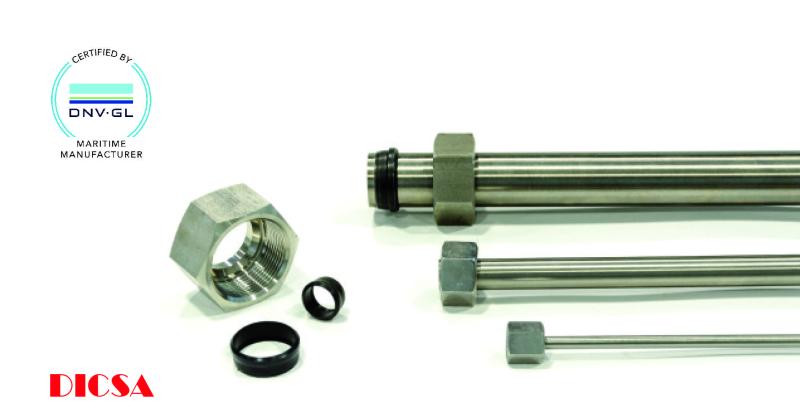
“Single Ferrule in steel is a good choice for oil service, while the double ferrule design is suited more for gas applications”

That is a preferred and widely accepted option. For oil based systems using steel components, we have always been great fans of hydraulic fittings by DICSA, Our customers have a very long relationship with DICSA products. In steel, these DIN2353 metric compression fittings are exceptionally reliable. Installing the fittings and tube may be easy, the pulling up and bending a piping a system can be a considerable job. Yes, getting tubes pre bent if you are doing runs, will cut the time dramatically, and you can finish off the installation in less than half the time.
Manual Bender for easy and quick installations.
8 ways of making life easy when you use ferrule fittings :
- Know the Sizes:
- Know your installation sizes. 1/2″ and 12mm are not the same !! Trying to install different size fittings together or on to a pipe will result in leakage and thereby a weak system design.
- Use Soft Seals (for a single ferrule system)
- Our customers have found it reliable to use soft seals with the DIN 2353 type hydraulic fittings. In case of a double ferrule fitting, ensure presence of both ferrules and in the correct orientation.
- Choose a genuine source and the Trust them :
- Don’t buy in cheap and be told that all fittings are the same. Years of research both on design and metallurgical parameters have led us to the success we have tasted for a long time now.
- Innovate in the Design stage not Installation stage.
- Try to simplify the design as much as possible but do not innovate during installation. With a little quiet thought previously, you can reduce the number of fittings and thereby potential leak points and cost. What more, we can help you do it !! Let us know.
- Eliminate Crosses and Tees :
- Go for a manifold and save on the cost of multiple fittings. See, we said we would help !!
- Design it for Use – not for the design.
- Don’t try the impossible on your space envelope. Piping up anything in a ridiculously tight envelope will be a nightmare, especially if you can’t actually spring pipes into fittings. Imagine the plight of the person maintaining it.
- Buy Good Tools:
- We cant stress enough on this point ! Tools make your job easy. Imagine using force to align out of plane bends caused by a cheap bending tool. The stress impacted on the joint is destined to leak in moments of test.
- Be Aware
- Know your system, know its design and what goes in it.
Useful Links:


Installation Best Practices : Read here
Browse DICSA products


The opinions in the blog above are solely that of the author.